
HOME › SERVICES › ROOF REPAIR
Storm Damage Roof Repair Across The Greater Toronto Area
What is seen after a storm is not necessarily what happened. Hail bruises the surface of the granule and breaks the mat underneath. Wind breaks seals leaks at transition areas that continue to leak with each rain. The insulation below can remain soaking wet for weeks and no ceiling will show anything until affected by the ice forces moisture under the eave courses. A storm damage repair from Roofing Repairs Dun-Rite Inc. works from the inside to the outside, as a surface repair would place the property in the same position next season.
01
Get Emergency Storm Repair Dispatched To Your Property Now
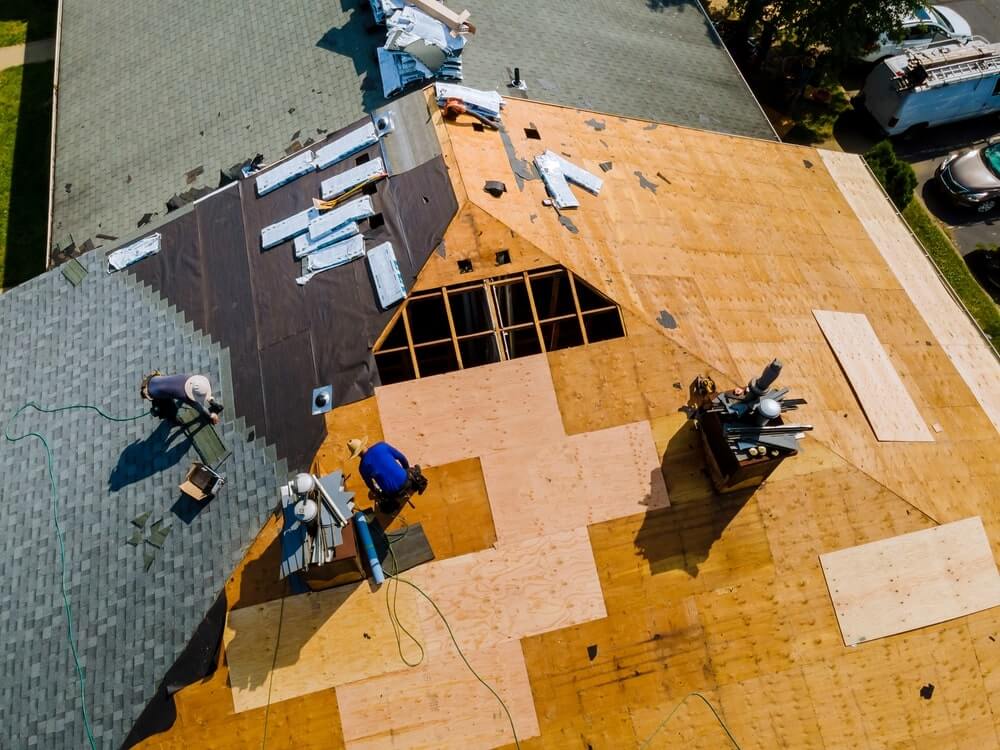
We deploy across the GTA for active water entry, significant material displacement and structural exposure, situations where waiting until Monday is not an option. Our team spreads temporary waterproofing membrane over the damaged area, restores the roofing material that is out of place and keeps additional water from entering while the extent of the permanent repairs is appropriately evaluated. That sequence matters. Cleaning up after stabilising is better than trying to do a permanent repair in poor conditions on a wet surface.
02
Claim With Confidence Using Our Documented Damage Reports
We document the situation exactly as we see it prior to handling a single material and that is exactly what an insurer is looking for and most contractors don’t even bother to provide. Photographic documentation and written damage assessment/repair cost documentation is standard and not request, for every repair that we do for a storm. When your adjuster questions the scope of your claim (or when your claim is challenged), you have evidence recorded prior to any work being done. That record is often worth more than the repair itself.
03
Fix Hail Damage Before It Turns Into A Leak
Hail impact is not just a “shingle and hope” situation; we take care of it systematically. The impact points bruise the granule layer and fracture the mat underneath – entry conditions may not leak this month, but will. Affected shingles are replaced and each shingle is checked for moisture that has been absorbed prior to our arrival and tracked to the underlayment and decking below. Where water has already reached the structure, the scope widens to attic moisture assessment, sheathing evaluation for softening and rot, and correction of the entry point before any interior work starts.
How Does Wind Actually Damage A Roof?
Wind follows a predible failure pattern on GTA roofs, and it concentrates where the roof changes direction. Shingles lift up and move on ridge lines, eaves. Valley metal tears. Flashing that is separated at walls and chimneys. Ridge caps are completely lifted up and the top part of the roof is not covered. The common factor is wind damage seals at transitions and once it is broken, it will not reseal, hence wind damage will give consistent leaks through every rain event thereafter.
Why Ice Causes The Damage Nobody Notices Until Spring
As the meltwater flows off of the warm roof, it flows out to the overhang at the roof’s edge, where it refreezes, and traps the next batch of meltwater behind it. Another consequence of that standing water is that it seeps back up under the shingle courses, where no roofing is intended to hold standing water. Nothing about this is visible from outside. The first indication will typically be a stain on a ceiling in February, where the underlayment and decking will have been wet for many months.
What Happens From The Moment We Arrive
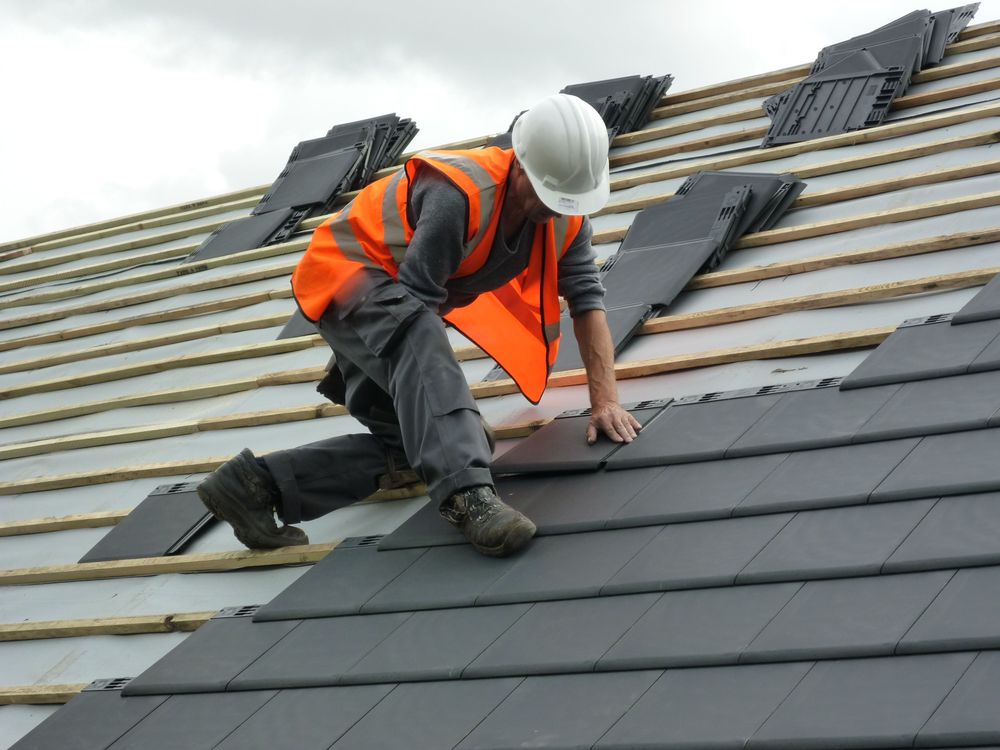
We check the entire roof area when there is storm damage because damage rarely remains confined in any one area. We determine if there is water penetration in the attic prior to any surface work. A photo of everything is taken prior to the removal of any material. Replacement shingles are as close as the manufacturer’s colour and profile range can duplicate your existing shingle profile and colour. No decking is installed over damaged decking. Brad Ellis inspects the completed repair himself before the crew leaves.
Repair Or Replace, And How We Decide
The size and the time of their occurrence resolve the issue. If the damage is limited to one side of a roof that’s been in service for 10 years, it’s a repair, even though it would cost a lot more to replace. If a storm has already taken its toll on a system that is already nearing the end of its useful life, or if storm damage is widespread and the decking below is damaged, then repairs are just a stopgap measure and money well spent. We give you the honest assessment with photographs, and you make the decision with real information rather than pressure.
Materials We Repair And Replace With
We only repair with the highest quality asphalt shingles on pitched systems, EPDM rubber, modified bitumen on flat and low slopes or heavy duty tar and gravel when matching the existing system. Underlayment goes down properly before material is laid, ridge caps and edges are sealed, and fasteners are checked uniformly across the repaired section. We supply extended material warranties, and the warranty papers are delivered to you when it is completed.
The Details That Decide Whether A Repair Holds
Storm repairs are successful or unsuccessful at the junctions but not over the open surface. We redo valley flashing to drain water without seams that part when the flashing moves. Drip edge configurations are restored along the perimeter, to allow water to flow off the roofline rather than along the back. Leak barriers go back at every penetration and transition point. Perimeter water controls at wall intersections are restored properly since that is where the storm went and where it will go again.
Speed Matters Less Than Whether It Holds
A lot of Contractors will be on your roof within a day of a storm and will be off your roof within an hour. The issue is whether or not the water infiltration problem has been addressed and whether or not the repair will hold up 5 winters later. That involves discovering the real leak, not just the stain under it, determining the extent of the water leak and making the repair so that it will hold up against the next winter freeze. We work to the second measure.
Storm Repair Coverage Across The Region
Our crews service Etobicoke, North York, East York, Scarborough, Markham, Richmond Hill, Thornhill, Pickering, Ajax, Oshawa and Mississauga. Properties in Durham Region get the brunt of a system passing over the lake and Pickering, Ajax and Oshawa have been our regular clients following a poor night. The same crew who are certified to do the job are here to help and there is no subcontractor, no change of documentation with postcode.
Etobicoke
North York
East York
Scarborough
Markham
Richmond Hill
Thornhill
Pickering
Ajax
Oshawa
Mississauga
Storm Damage? Call Before The Next Rainfall
Describe what you are seeing, inside and out, and when the weather hit. We will go out and do an inspection of it, stabilise anything that is leaking and record it correctly for your insurance company before any work is done.